
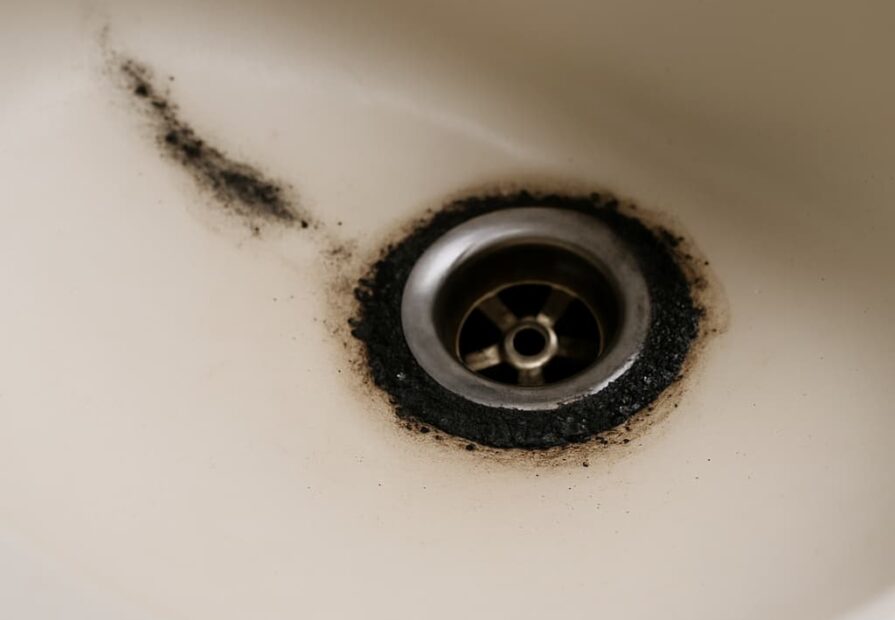
Black sludge in your sink drain isn’t just gross — it can be dangerous. This black gunk, often made up of mold, bio slime, bacteria, and decomposing debris, may pose health risks and signal serious plumbing issues. If you’re seeing black mold in your sink or noticing bad smells and slow draining, don’t ignore it. In this article, we’ll explain what black sludge really is, the dangers it poses, how to clean it safely, and when it’s time to call in a professional.
What is Black Sludge?
Black sludge is a thick substance that develops in your drainpipe through the combination of soap scum, grease, and organic matter, typically found in bathroom or kitchen sinks. Due to its coming loose in the pipe or growing large enough, it will make its way back up and out of your drain.
Black sludge in a sink drain is often a sign of a more serious problem, such as a clogged drain, vent pipe obstruction, or sewage backup, and should not be ignored.
Health Risks of Black Sludge

Mold and Bacteria Concerns
Mold and mildew develops within black sludge, which can cause respiratory issues, and poses a great risk for those with asthma. It also contains dangerous bacteria that can cause infections if it comes into contact with open wounds.

Damaged Air Quality
Sludge buildup releases bad odours that can damage indoor air quality and lead to eye and throat irritation, headaches, or nausea.

Skin Infections
If you accidentally touch black sludge, this could cause skin irritation, rashes, or infections due to its bacteria. If you have sensitive skin or a weakened immune system, it’s important to be particularly cautious of this.
How to Get Rid of Black Mold in the Sink
DIY Cleaning Solutions
- Boiling Water — Pouring boiling water down the drain can loosen and dissolve the buildup of sludge, helping prevent small blockages.
- Baking Soda and Vinegar — Pour a cup of baking soda and white vinegar down the drain. Wait for 30 minutes before rinsing with hot water. This dissolves grease and kills bacteria.
- Hydrogen Peroxide — Pour hydrogen peroxide directly down the drain. Wait just a few minutes before rinsing with warm water. This can break down organic matter, disinfecting the drain and eliminating bad odours.
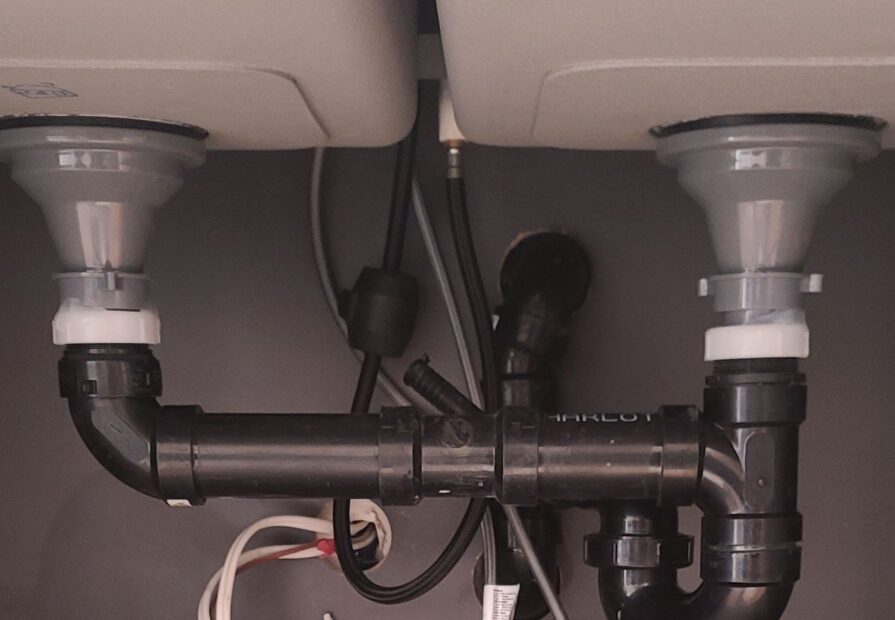
- Drain Snake — Using a drain snake can physically break up and remove larger blockages in persistent buildup of sludge.
Maintenance and Preventative Measures
- Use Drain Strainers — A simple mesh strainer over your drain can help prevent debris like large food scraps or hair from building up in your pipes.
- Don’t Pour Grease Down the Drain — Avoid pouring grease down the drain. Instead, pour it into a sealed container and throw it away in the trash.
- Clean Regularly — Having a regular cleaning schedule that includes flushing your drains with boiling water once a week will prevent buildup.
When to Call a Professional
If DIY cleaning solutions aren’t working or you are experiencing gurgling sounds, slow draining, or constant clogging, it’s time to call a professional.
At AquaRescue, we know how dangerous black mold in the sink drain can be, and offer drain line cleaning or power flushing services to help remove it for you. Contact us today!